

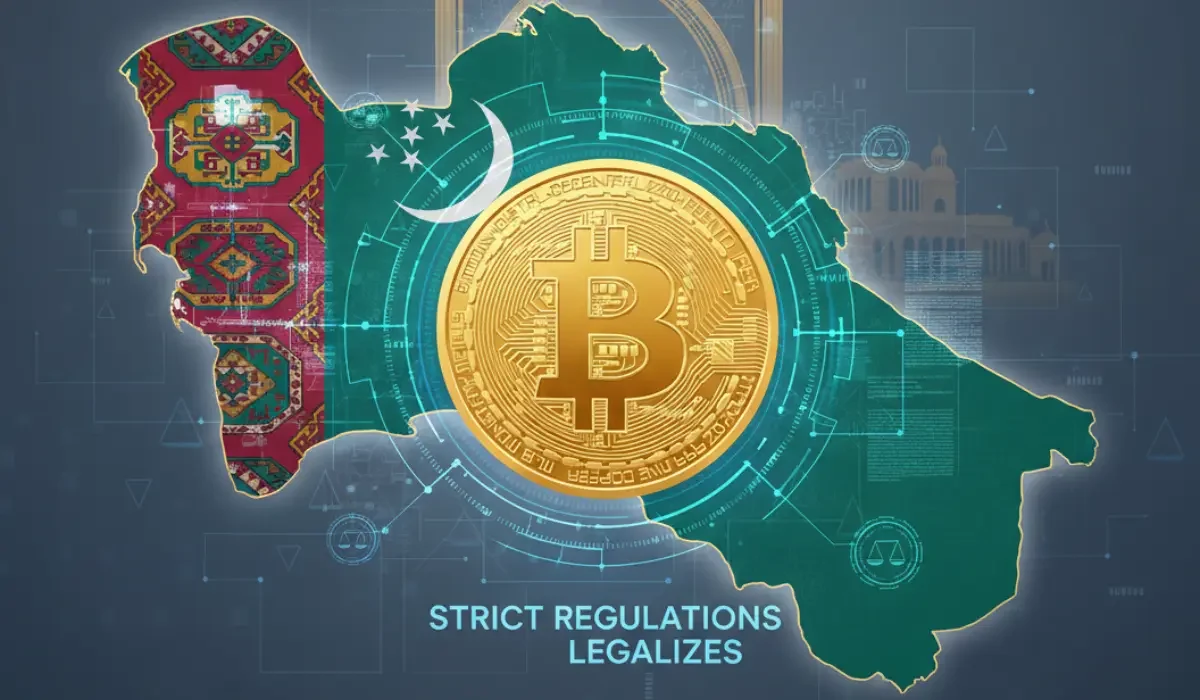
Turkmenistan Legalizes Crypto Trading and Mining Under Strict Regulations

Key Takeaways
- The Central Asian nation of Turkmenistan has passed a landmark legislation incorporating the crypto sector into its oil-dominated economy. The crypto law, set to come into force next year, will be overseen by a dedicated State Commission.
- The legislation mandates crypto exchanges and custodial services to license their activities and follow strict KYC, AML, and cold storage rules. Crypto mining and mining pool operators must also obtain registrations, with explicit bans on covert operations and credit institutions offering crypto services.
- Turkmenistan’s central bank has the authority to approve decentralized ledgers or operate its own blockchain infrastructure that will be permissioned and surveilled. Digital assets will be categorized as “backed and “unbacked,” with regulators establishing liquidity conditions, settlement protocols, and emergency redemptions.
- Despite the sweeping regulation, the country does not consider cryptocurrencies as legal tender, currency, or securities.
Turkmenistan, one of the world’s most secretive states and closed economies, has made a historic move by passing sweeping legislation that establishes a regulated environment for the cryptocurrency industry, but with tight oversight.
According to a report from Business Turkmenistan, a local news outlet, President Serdar Berdimuhamedov signed the bill into law on November 28, which mandates licensing, know-your-customer (KYC), Anti-Money Laundering (AML), and cold storage requirements for crypto exchanges and custodial services.
Turkmenistan Incorporates Crypto into the Economy, but Under a Strict Regulatory Regime
The crypto law, set to come into effect in 2026, prohibits credit institutions from offering crypto-related services. The government has the authority to halt, void, or force a refund of any token issuances. Cryptocurrency mining and mining pool operations in the country must be registered, and covert operations are explicitly prohibited.
The Central Bank of Turkmenistan has the power to authorize distributed ledgers or operate its own blockchain infrastructure, effectively driving residents and citizens towards using permissioned and surveilled networks.
Despite these regulatory windows, the law states that cryptocurrencies won’t be recognized as legal tender, currency, or securities in the country.
It also categorizes digital assets into “backed” and “unbacked.” Regulators are tasked with establishing liquidity conditions, settlement protocols, and emergency redemptions for cryptocurrencies belonging to the backed category.
Turkmenistan Sets Up State Commission to Regulate Crypto Market

Turkmenistan’s crypto law came into effect following a cabinet meeting on November 21, where Deputy Chairman of the Cabinet of Ministers, Hojamyrat Geldimyradov, outlined the technological, legal, and organizational foundations for introducing digital assets into the economy in a report that seeks to establish a dedicated State Commission to oversee the sector.
The move is significant because the former Soviet republic of Turkmenistan has long enforced a strict ban on cryptocurrency activities, prohibiting trading, mining, and the use of digital assets for payments.
Authorities regularly raided illegal Bitcoin mining operations, seizing equipment. However, underground crypto activity persisted, thanks to VPNs and peer-to-peer, decentralized platforms.
These measures were intended to protect the national currency, the Turkmenistani manat, and reduce the risk of speculative investments and illicit activities such as money laundering or terrorist financing. Severe internet restrictions and government surveillance further isolated citizens from accessing global crypto markets.
Turkmenistan is a landlocked country in Central Asia with a population of around 7.6 million and an economy primarily based on natural gas exports. Its politics is dominated by a highly centralized presidential system that is widely considered to be one of the most repressive authoritarian regimes. It also maintains strict social media and internet censorship, including bans on platforms like X and Telegram.
Pakistan’s VARA Seeks to Provide Legal Clarity on Crypto and U.K. Regulators Working to Launch Stablecoin Framework Modeled on America’s GENIUS Act
The country’s move to adopt cryptocurrencies under a regulated environment comes amid a global wave of governments rushing to establish digital asset and stablecoin frameworks.
In September, Pakistan, another Central Asian nation with a strict regulatory regime, allowed international crypto exchanges to operate in the country under the newly formed Pakistan Virtual Assets Regulatory Authority (VARA), which seeks to provide legal clarity and curb illicit finance.
Binance co-founder and former CEO, Chanpeng ‘CZ’ Zhao, has been appointed as a Strategic Advisor to the Pakistan Crypto Council (PCC) – a government-backed regulatory body established earlier this year to oversee the country’s blockchain and digital asset initiatives – to guide crypto regulation, infrastructure, education, and adoption.
Earlier this week, the United Kingdom’s tax authority floated a new framework that would ease the burden on decentralized finance (DeFi) users by deferring capital gains taxes on crypto lending and liquidity pool activities until the underlying token is sold.
Recently, Bank of England Deputy Governor Sarah Breeden said she expects the UK to keep pace with industry leader, the United States, on stablecoin regulation. Speaking at the SALT fintech conference in London, she confirmed that UK regulators are involved in active discussions with their U.S. counterparts on implementing a stablecoin framework.
Breeden dismissed criticism that the UK is falling behind the US, which passed the landmark GENIUS Act in July for overseeing dollar-backed stablecoins. In September, Chancellor Rachel Reeves met with US Treasury Secretary Scott Bessent, where both countries agreed to strengthen their coordination on crypto and stablecoin activities.

Crypto & Blockchain Expert