

SEC Grants DTCC Subsidiary No-Action Letter to Launch Tokenization Service

Key Takeaways
- SEC’s no-action letter enables DTCC to carry out tokenization of major US financial assets.
- The launch is scheduled for late 2026. The program will run for a period of three years on pre-approved blockchains.
- The move is proof of the SEC’s changed attitude towards digital assets and blockchain technology.
- RWAs have a huge untapped potential amounting to over 400 trillion US dollars.
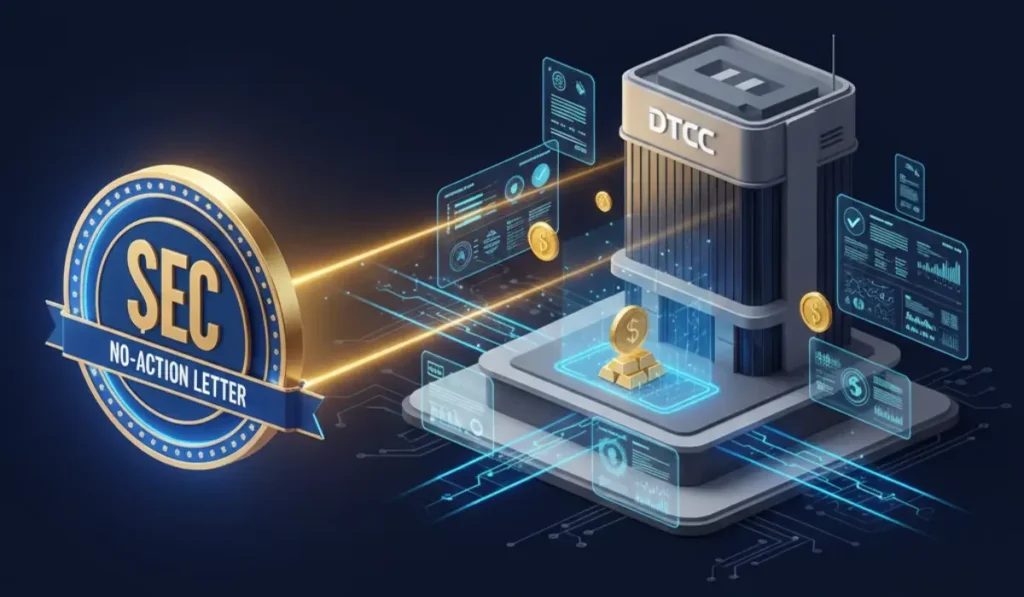
The DTCC, or Depository Trust & Clearing Corporation of the US government, is a critical element of the traditional financial sector. On 11th December 2025, the DTCC received a rare and rather interesting no-action letter from the SEC(Securities and Exchange Commission). With this, the DTCC can now tokenize traditional securities like stocks, bonds, mutual funds, and ETFs under a controlled production setting.
The DTCC Tokenization & The Market
This approval from the SEC has given DTCC the plans to create a tokenized basket. This basket will contain highly liquid assets such as components of the Russell 1000 index, bonds, notes, major index-tracking ETFs, and US Treasury bills.
Reports from the industry suggest that this service will be launched by mid-2026. This service will run for a period of three years on pre-approved blockchains. DTCC is one of the most important subsidiaries of the SEC and provides post-trade services like clearing, settling, and reporting. The DTCC has announced that no legal pursuit will be enforced as long as the program is carried out as per the guidelines.
The market viewed this move with renewed enthusiasm, as no-action letters are not commonly issued unless the project has clear safeguards. The general view is that with the DTCC receiving the no-action letter, RWA tokenization will get a much-needed regulatory clarity.
According to the DTCC CEO Frank La Salla, these tokenization efforts have a significant impact on the market. According to Salla, this tokenization will redefine how securities move across the market.
Salla pointed out that the programmable assets are capable of creating potential improvements in collateral mobility, continuous market access, and new trading mechanisms.
Implications Of The Approval
The main implication of the move remains that the ownership of the assets will still be in their traditional format. However, by bringing in the blockchain element, the DTCC and SEC plan to bridge the Traditional Finance Sector with emerging DeFi blockchain technology.
At the moment, this RWA token product will be available only to the DTCC and its clients. The move towards RWA tokenization by the SEC is viewed from a positive perspective by most investors. Since the Trump administration’s ascent to power, the SEC has been increasingly supportive of Digital Finance and blockchain technology in general.
Previously, two DePIN (Decentralized Physical Infrastructure Network) projects received similar no-action treatment. In addition to this, Double Zero, another DePIN, received a no-action letter in August. The three instances prove that the new SEC leadership is taking the matter of blockchain technology seriously and is making calculated steps towards integrating traditional finance with decentralized finance.
This is much different than the previous SEC decisions, which had a tight grip on crypto and were never willing to liberate the crypto domain to this extent so that innovations will prosper. Much of this has to do with the political leadership and the stand they have taken regarding cryptocurrency and blockchain technology.
The RWA-Tokenization At Major Crossroads
The recent research from Web3 digital property firm Animoca Brands has reported that RWA tokenization is capable of unlocking a massive market structure that is still untapped. According to Animoca, there is potential for a 400 trillion US dollar RWA Token market.
The progress that RWA tokenization is gaining is substantial. With the Standard Chartered Bank-backed Libeara tokenizing traditional gold investment through its subsidiary SC Ventures in Singapore, the investors can now purchase traditional gold through blockchain rails.
All of these point towards the pivotal moment in history where the long-standing concept of RWA tokenization is taking form in real life. With this, there is a whole lot of potential to be unlocked. RWA tokenization can go beyond the realms of traditional financial instruments and can venture into deeper territories like real estate and consumer services.
Also Read: Study Finds Stablecoins Now Supporting Key Parts of Australia’s Financial System

Crypto & Blockchain Expert