

Rep. Keith Self Files Amendment to Prevent a US CBDC in Defense Bill

Key Takeaways
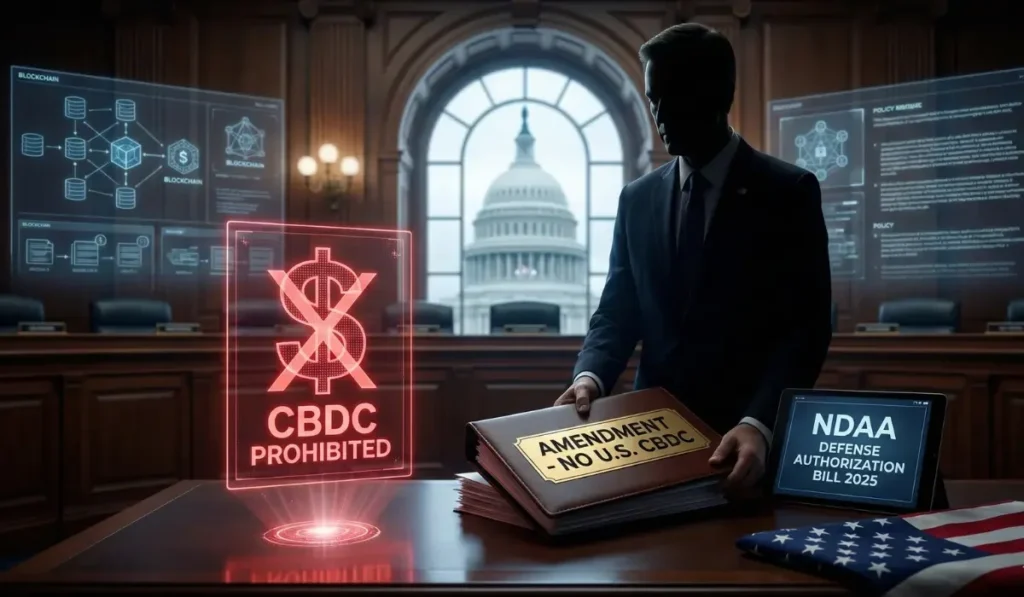
- Rep. Keith Self submitted an amendment to add a Central Bank Digital Currency (CBDC) ban to the National Defense Authorization Act (NDAA).
- The CBDC critics argue that a government-issued digital currency is a potential threat to privacy and personal financial freedom.
- Rep. Marjorie Taylor Greene also echoed similar sentiments.
- Many countries across the globe are exploring the possibilities of launching their own central bank currencies, and some have already issued them.
Rep. Keith Self submitted an amendment to add a Central Bank Digital Currency (CBDC) ban to the National Defense Authorization Act (NDAA). “I have submitted an amendment to add a Central Bank Digital Currency (CBDC) ban to the National Defense Authorization Act (NDAA). Promises were broken to include this language in the NDAA. My amendment would fix the bill. The House Rules Committee meets later TODAY to decide if it gets a floor vote. I hope they do the right thing”, he wrote on X (formerly Twitter) today.
His submission, titled “Anti-CBDC Surveillance State’’ seeks to prohibit the Federal Reserve Bank from issuing any CBDC or similar digital asset directly, providing any financial products or services to individuals directly, or maintaining an account on behalf of an individual. If adopted, they would block the issuance of any government-controlled digital currency in the US. Many republics are echoing sentiments similar to Self, the House representative from Texas.
Rep. Marjorie Taylor Greene, in an X post shared yesterday, December 9, stated that she supported crypto but would never support giving the government the ability to turn off people’s ability to have full control of their money and to buy and sell.
She further added that back in July, she had voted no on the GENIUS Act because it contained a back door to a central bank digital currency (CBDC). At that time, Mike Johnson, the speaker of the U.S. House of Representatives, had promised conservatives that he would put Tom Emmer’s bill, which closed the loophole to CBDC, in the NDAA, but he hadn’t kept his promise. It was not in the NDAA, so the CBDC loophole remained, she added.
The CBDC critics argue that a government-issued digital currency is a potential threat to privacy and personal financial freedom. Moreover, it may empower the government to track how citizens spend their money. Pushing the amendment onto NDAA, a must-pass bill that sets the budget and policies for the Department of Defense, the senators are trying to increase the probability of its passage.
The Administration’s Evolving Stance on CBDC
In a report released by the Federal Reserve back in 2022, it defined CBDC as “a digital liability of a central bank that is widely available to the general public.” The Biden administration further directed federal agencies to study the risks and benefits of CBDC. Early this year, in January, Trump issued an Executive Order that banned agencies from “undertaking any action to establish, issue, or promote a CBDC” and to “terminate any plans or initiatives related to the creation of a CBDC.” The lawmakers now wanted to make the ban permanent by passing a law.
Many countries across the globe are exploring the possibilities of launching their own central bank currencies, and some have already issued them. A prominent example is digital yuan, or e-CNY, the CBDC of China. The supporters of CBDC claim that the issuing of it would promote efficiency and financial inclusion, while the critics argue that it will undermine stablecoins, pose privacy threats, and compromise financial freedom.

Crypto & Blockchain Expert